
Hotel Marketing: Why the Guest Journey Doesn't End at Booking
A booking is not the end of the customer journey, it's the point where your marketing promise meets reality. A guest might discover your hotel through Instagram, find you through Google, read reviews, browse your website and finally make a booking.
At that point, it's easy to think the marketing has done its job. But what happens next? The confirmation email, the days leading up to arrival, the welcome at reception, the room, the recommendations from your team, the final goodbye and the email they receive when they get home.
Every one of these moments shapes how a guest experiences your brand and every one is an opportunity to deliver on the promise your marketing made.
Research into hotel booking behaviour, guest reviews, multisensory experiences and customer engagement all points towards the same broader idea: the relationship between a hotel and its guest doesn't begin and end with the booking. Marketing is present throughout the journey.
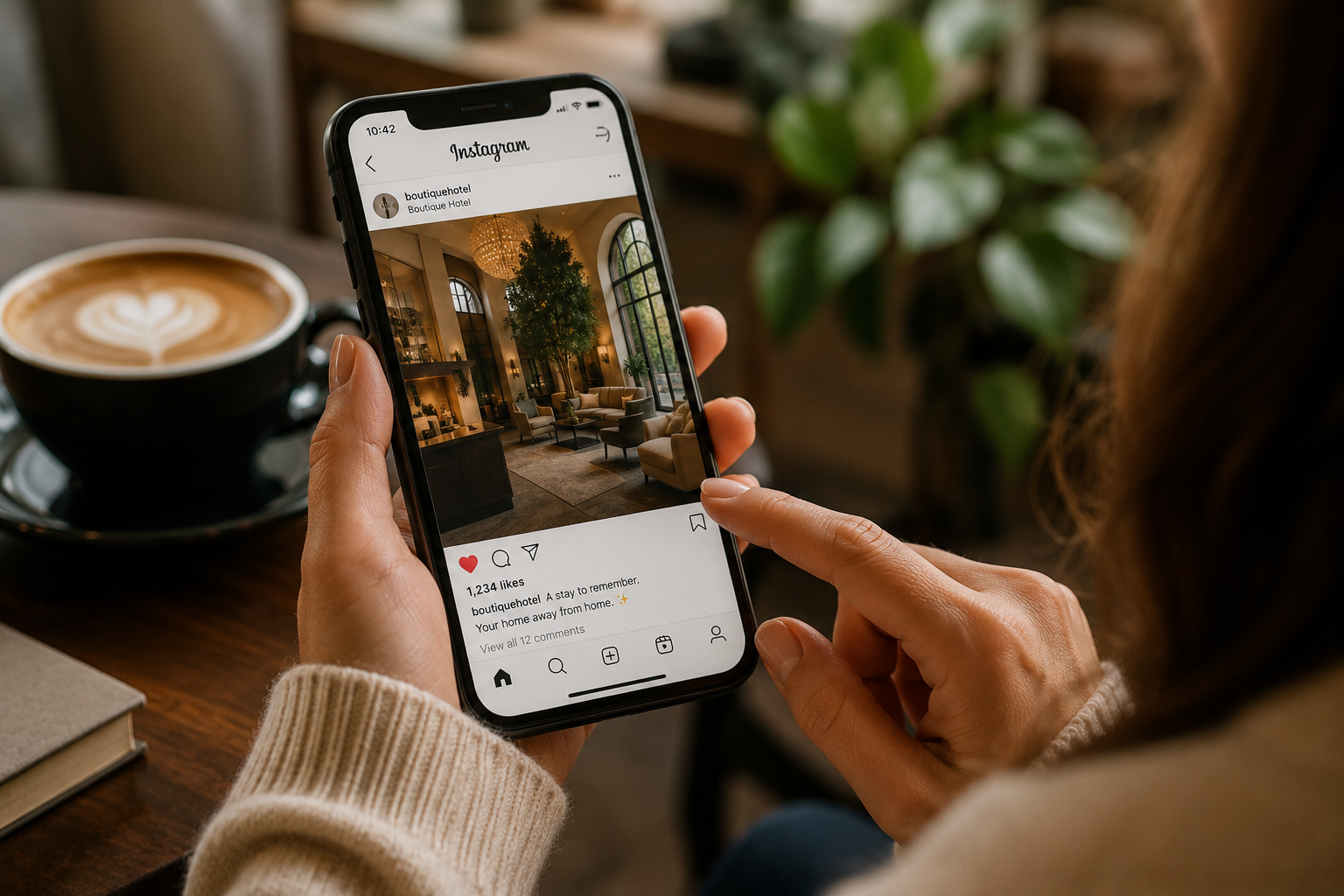
1. First impressions: before they ever book
Your guest's first interaction with your business could be a social media post, a Google search, a review, a recommendation or an online advertisement.
Before they have even considered booking, they're already forming an impression.Your imagery, tone of voice, reviews and messaging are telling them what kind of experience to expect.
Research into online hotel shoppers has found that factors such as reviews, hotel information, photographs and price all play an important role in how travellers evaluate hotels online. Guest reviews are particularly powerful because they provide something that a hotel's own marketing cannot: the perspective of other guests.
Your marketing creates the expectation but the experience has to deliver it. That means the guest journey begins long before someone arrives at your front door.
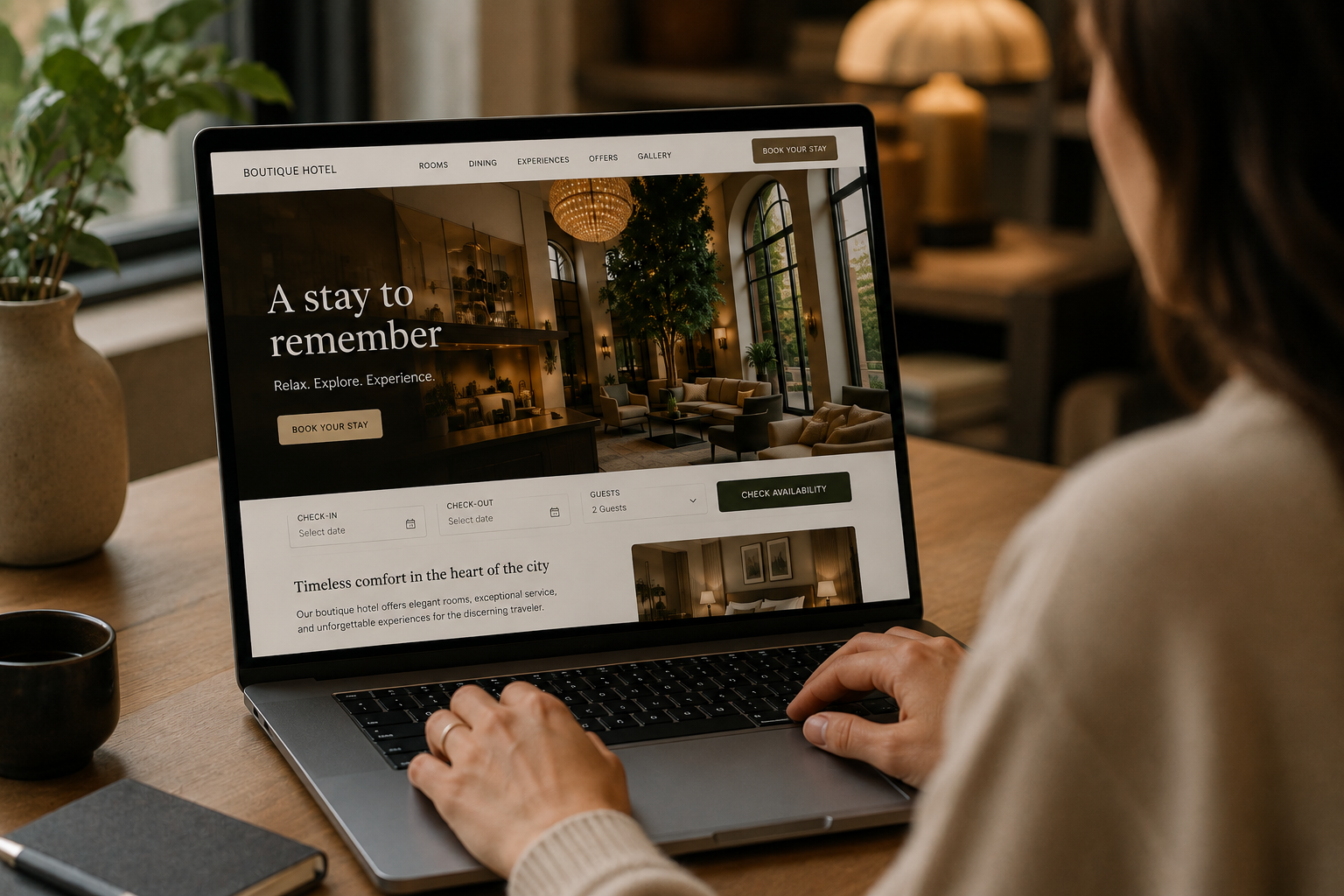
2. Your website: where interest becomes consideration
Your website has two jobs. It needs to inspire someone to want to stay, but it also needs to give them the information and confidence to actually book.
Too often, I come across slow, clunky or malfunctioning hotel websites that put me off booking directly and push me towards third-party booking platforms with more reliable, familiar and easy-to-use booking experiences.
Even a beautiful website isn't enough if guests can't easily find what they need. Can they understand what makes you different? Can they find the right room? Can they understand the location? Can they easily book?
Importantly, does the experience presented online actually reflect what they will experience in person?
Research into online hotel shoppers reinforces the importance of the information guests encounter during the research and decision-making stage. Your website is not simply a digital brochure or booking tool, it is one of the first experiences a potential guest has with your brand.
Your website is not separate from the guest experience. It is part of it.
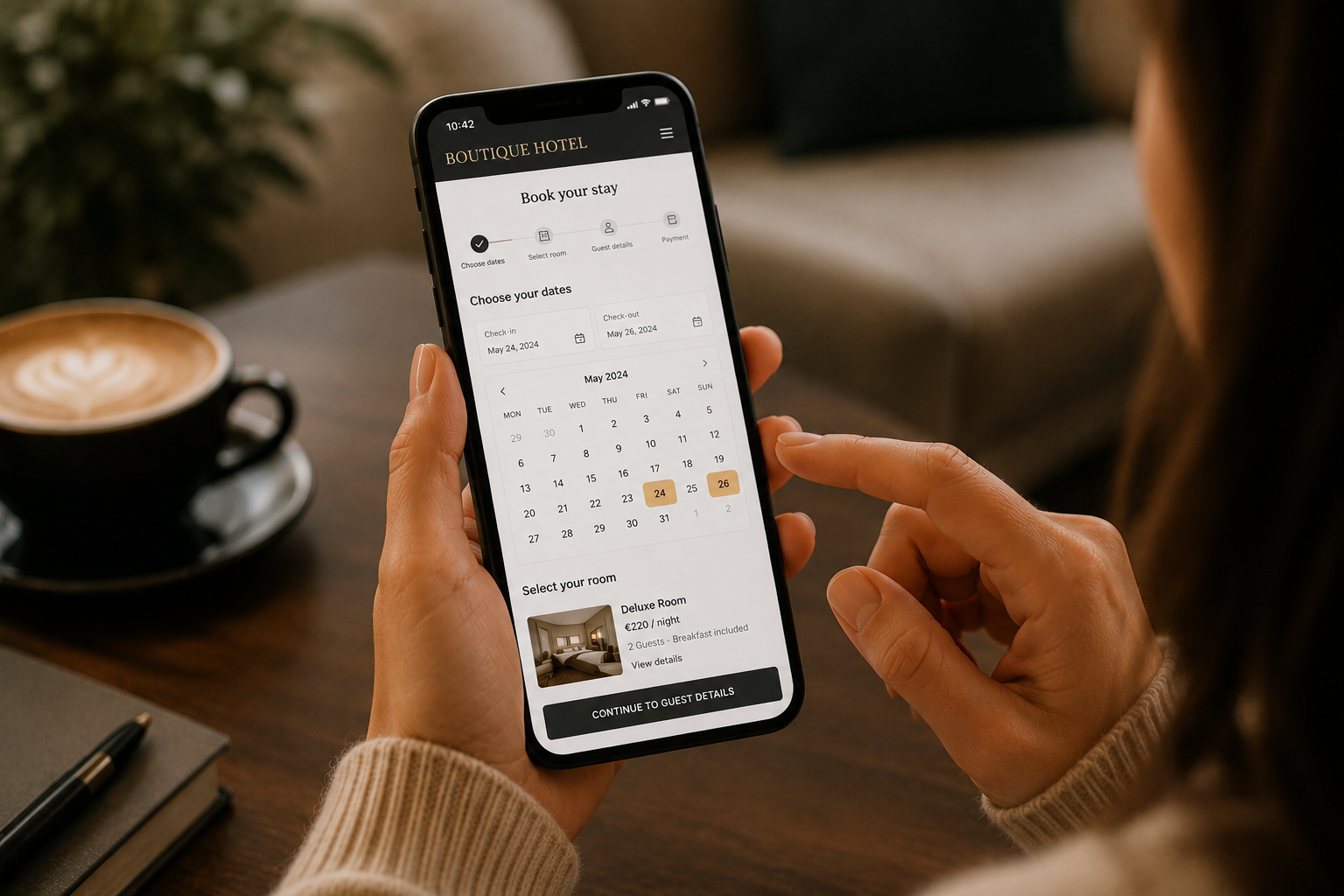
3. The booking journey: removing friction
The booking process is another opportunity to build confidence.
Every additional question a guest has, every confusing step and every piece of missing information creates friction. The goal isn't simply to get someone to click “Book”. It's to make them feel confident that they've made the right choice. A great booking journey turns “I think I'll stay here” into “I can't wait to stay here.”
This is where many independent tourism and hospitality businesses can fall short, often due to a lack of investment in their own website and an over-reliance on third-party booking platforms.
An OTA can provide a consistent, familiar booking experience across thousands of properties. If booking directly with your hotel is slower, more confusing or less trustworthy, guests may choose the OTA instead even if they originally discovered your hotel elsewhere.
That means the direct booking experience isn't just a sales function, it's part of your marketing.
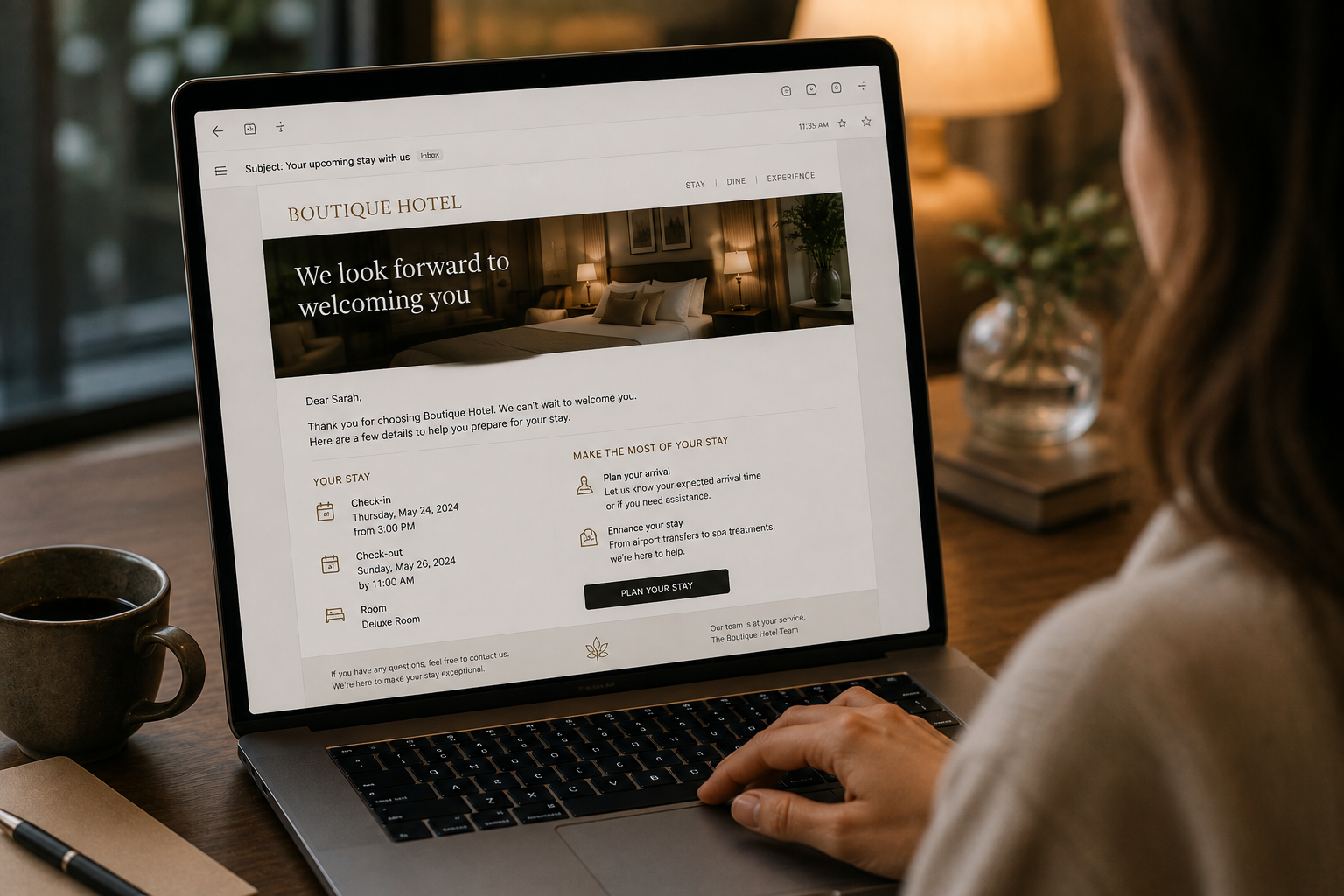
4. Pre-arrival: start the experience early
Once the booking is made, communication shouldn't stop. This is when anticipation begins.
A useful pre-arrival email can answer practical questions, but it can also do something more important:
Make the guest feel expected. What will they need to know before arriving? What could they book in advance? What should they see or do locally? What can you tell them that makes their upcoming stay feel more personal?
Research into the online hotel customer journey suggests that information continues to matter as guests move closer to their stay. If guests are continuously having to contact you to ask basic questions, that can be a telltale sign that your pre-arrival information is lacking both on your website and in your communications.
The experience doesn't have to begin at check-in. You can start it days or even weeks before arrival.
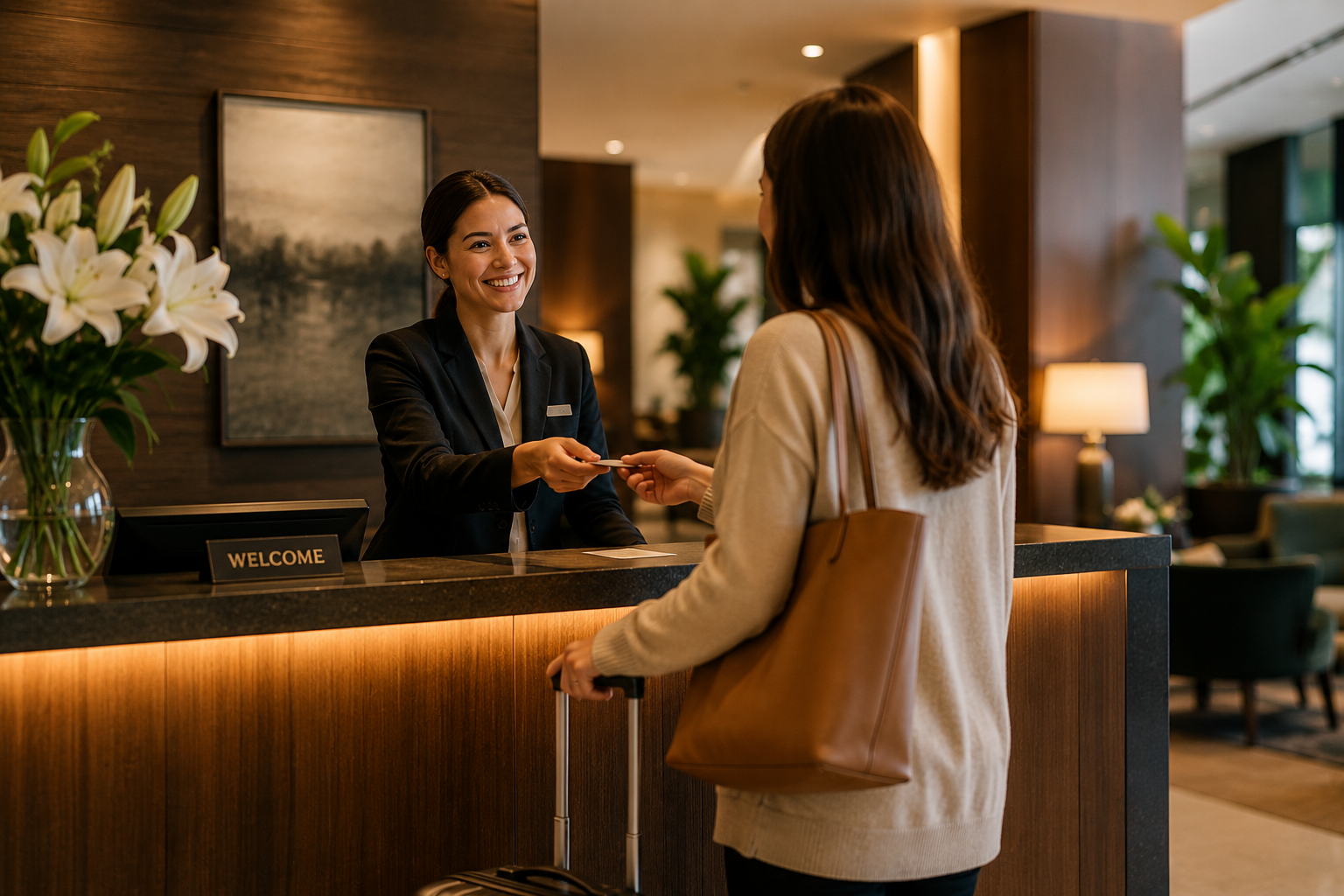
5. Arrival: deliver on the promise
Here comes the moment where expectation meets reality: the guest walks through the door.
The Psychology of Arrival
First impressions form quickly. Research in psychology has shown that people can form impressions from facial appearance in as little as 100 milliseconds. While a hotel arrival is obviously far more complex than seeing someone's face, the principle is relevant: people begin forming judgments rapidly based on the information available to them.
For a hotel guest, that information isn't just the welcome they receive. Before they have even had a meaningful conversation with a member of staff, they are already taking in their surroundings.
The sensory cues
Research into the multisensory hotel experience highlights the important role that the environment plays in shaping a guest's perception. Lighting, temperature, cleanliness, sound, scent and the overall atmosphere can all contribute to how a guest experiences a property.
The importance of arrival
Research in environmental psychology also shows that people naturally divide continuous experiences into separate events, with transitions and boundaries influencing attention and memory. Crossing into a new space can therefore mark an important transition in an experience.
In hospitality, this makes arrival particularly significant. A review of multisensory hotel experiences notes that the experience of arriving and checking in is likely to leave a lasting, and potentially disproportionately important, impression on a guest's overall memory of their stay.
This is where all those photographs, descriptions, reviews and emails suddenly become real.
Is the welcome warm? Is check-in easy? Does the atmosphere match what they expected? Does someone take the time to understand what they need?
The arrival doesn't have to be elaborate and often it's the smallest details that make people feel welcome. However, this is an important moment, it's where the marketing promise meets the physical experience.
6. The stay: the marketing becomes the experience
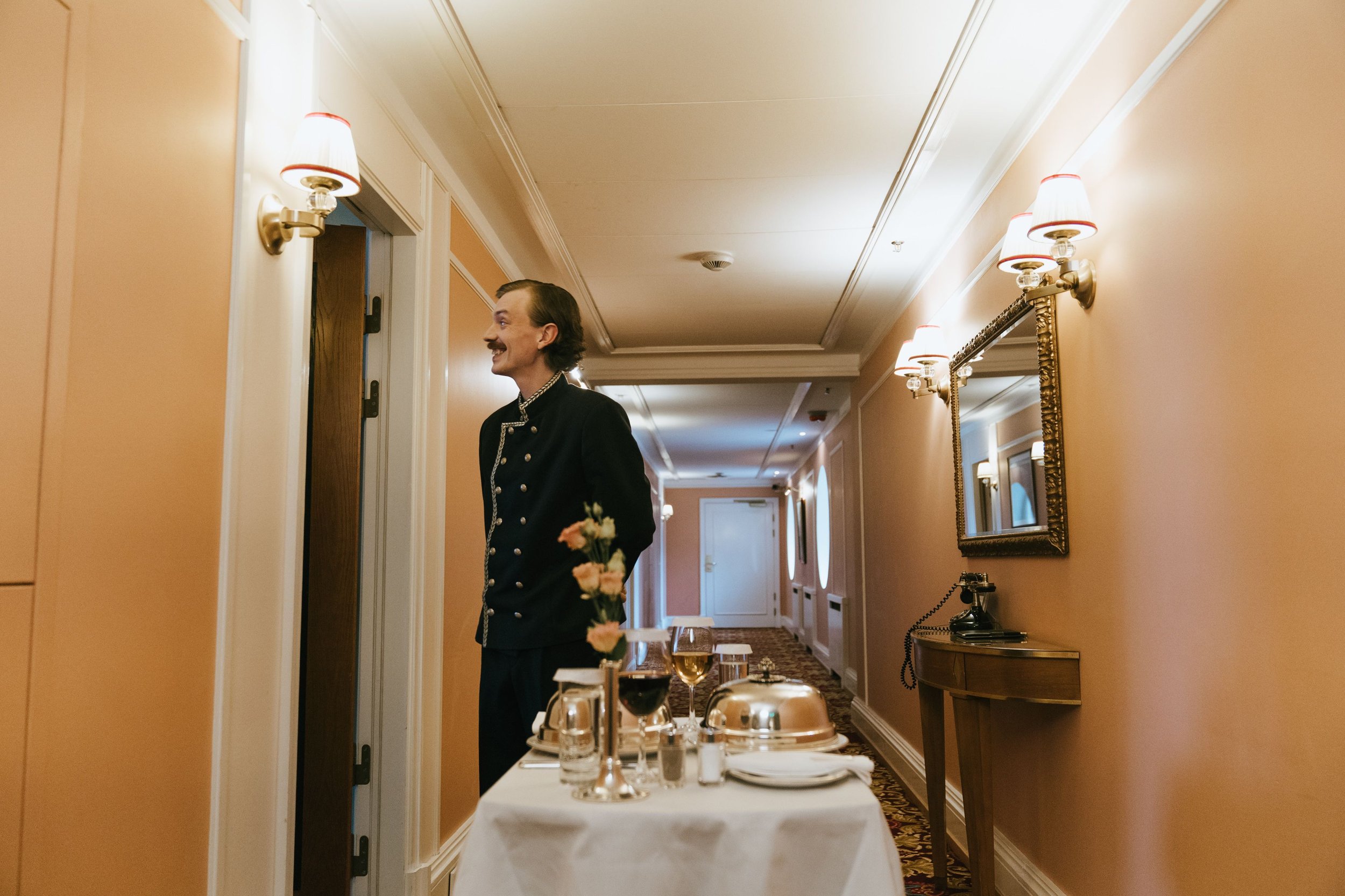
During the stay, the marketing promise becomes the lived experience. Every interaction contributes to the guest's perception of your brand.
A recommendation from a receptionist, a beautifully prepared room, a thoughtful amenity, clear information, a team member remembering the guests name or something they mentioned earlier. These moments may not appear in a marketing plan, but they can become the moments a guest remembers most.
Research into online guest reviews provides an interesting reminder of this. Guests don't simply review rooms and facilities. They talk about staff, service, location, breakfast, cleanliness and the details that shaped their experience. In other words, your guests are creating marketing content for you whether you realise it or not.
The experience extends beyond your property, your business is part of a destination. Helping guests discover the right restaurant, neighbourhood, attraction or local experience doesn't just improve their stay. It can strengthen your relationship with the wider destination and help position your business as a useful part of the visitor experience.
A hotel isn't operating in isolation, it sits within an ecosystem of places, people and experiences that collectively shape a visitor's perception of a destination.

7. Departure: the final impression
It's easy to think of checkout as the final transaction but it's actually your final in-person touchpoint.
Was checkout easy? Did the guest feel appreciated? Did someone ask about their stay? Was there a natural opportunity to encourage them to return?
The goodbye truly matters because the last moments of an experience often influence the story people tell afterwards.
8. Post-visit: don't let the relationship end
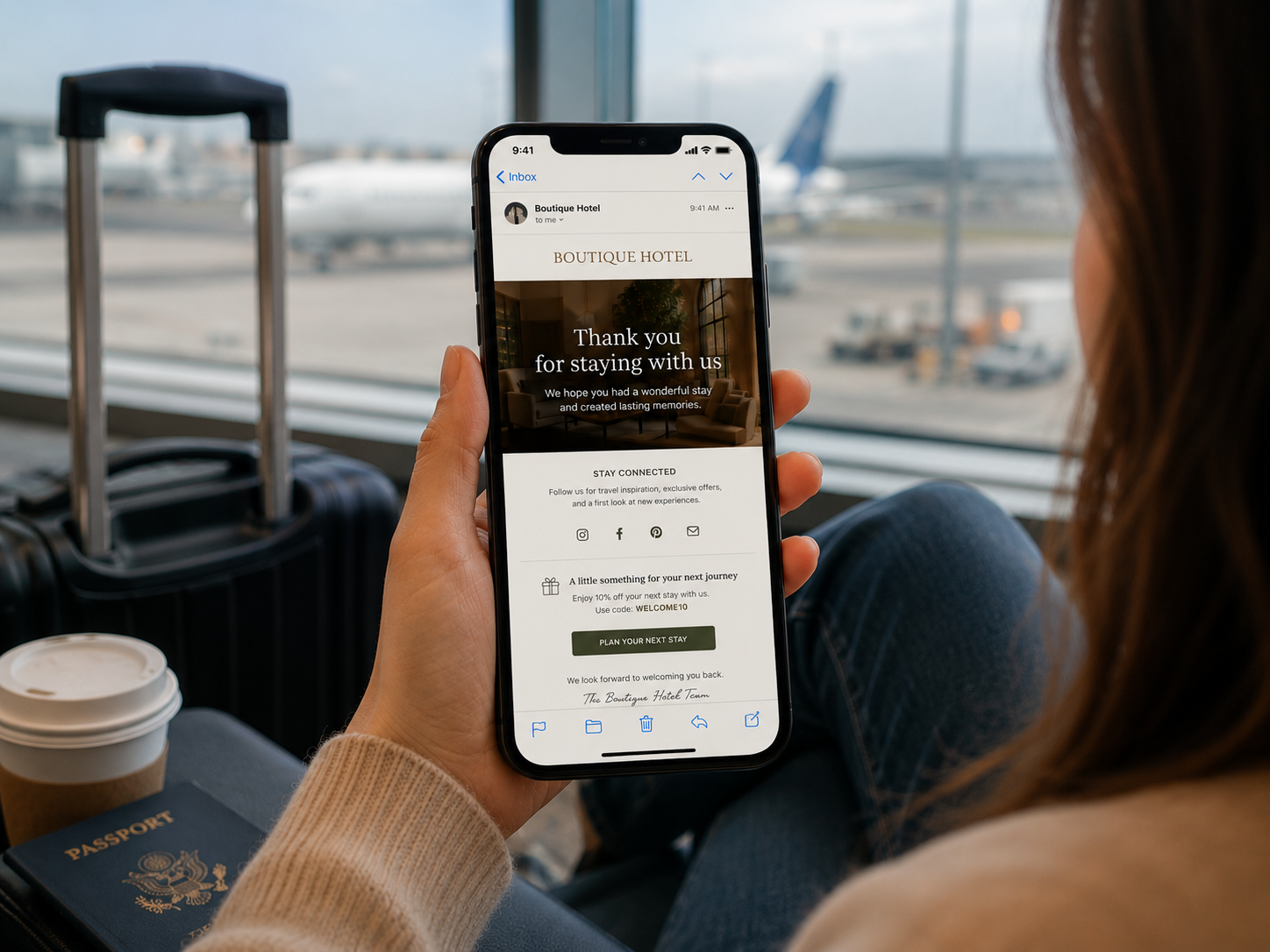
The guest has gone home, but the relationship doesn't have to end there. A thoughtful follow-up can encourage feedback, generate reviews and keep your business in the guest's mind.
Research into customer engagement in the hotel industry suggests that engaging with guests after their stay can influence satisfaction, loyalty and future booking behaviour.
Responding to feedback matters
Guest feedback, whether positive or negative, signals a willingness to engage with your brand. Research has found that guests who provide feedback are almost 50% more likely to become loyal. When hotel management responds, the likelihood of loyalty increases even further.
How you respond matters too. When a guest experiences a service failure, acknowledging the issue with a personalised and detailed apology can help improve their satisfaction on future stays.
A simple thank you can go a long way
Post-stay communication can also influence whether a guest shares their experience online.
Interestingly, research suggests that a quick, automated thank-you can increase the likelihood of guests sharing reviews after future stays, while an overly detailed thank-you may have the opposite effect.
Sometimes, a simple and timely “thank you for staying with us” is enough.
Post-visit engagement can support direct bookings
Engaging with guests after their stay can also influence how they choose to book in the future.
Research has found that engagement through a Guest Satisfaction Survey (GSS) can increase the proportion of direct bookings by approximately 5%, creating additional savings on OTA commissions.
Post-stay communication isn't simply about collecting feedback or asking for a review. It can strengthen guest relationships, encourage loyalty and give guests a reason to return. The goal isn't to sell to them forever. It's to give them a reason to remember you and a reason to come back.
So, where does marketing actually end?
Perhaps it never does…Hospitality marketing isn't simply about generating bookings, it's about creating a consistent journey from discovery to return.The strongest businesses understand that marketing and guest experience aren't two completely separate functions.
Your marketing creates the promise, your guest experience delivers it.
The relationship you build afterwards determines whether that guest remembers you, whether they leave a review, recommend you and whether they come back.

How I help tourism & hospitality businesses connect the journey.
Guest Experience Reviews
I look at the journey from the guest's perspective, from the first digital impression to the final goodbye and post-stay relationship, identifying friction, missed opportunities and ways to make the experience more consistent with your brand.
Tourism Marketing Strategy
I help businesses develop practical marketing strategies that connect positioning, digital channels, content and the customer journey to wider business goals.
Destination & Local Partnerships
I help businesses build meaningful connections with local partners and experiences, creating greater value for visitors while strengthening their role within the wider destination. Great marketing shouldn't just get someone to book, it should make them glad they did.
Further Reading
If you'd like to explore some of the research and ideas behind the guest journey further, these are a few resources I found particularly interesting:
What Online Hotel Shoppers Are Looking For — Cornell University
Online Guest Reviews and Hotel Classification Systems — UNWTO & Cornell
Sensehacking the Guest's Multisensory Hotel Experience — University of Oxford
Customer Engagement and Long-Term Loyalty — Cornell University